Nona and the accidental Miracle
Our Lady of the Blessed saints church had seen its share of miracles, but not so many recently until...
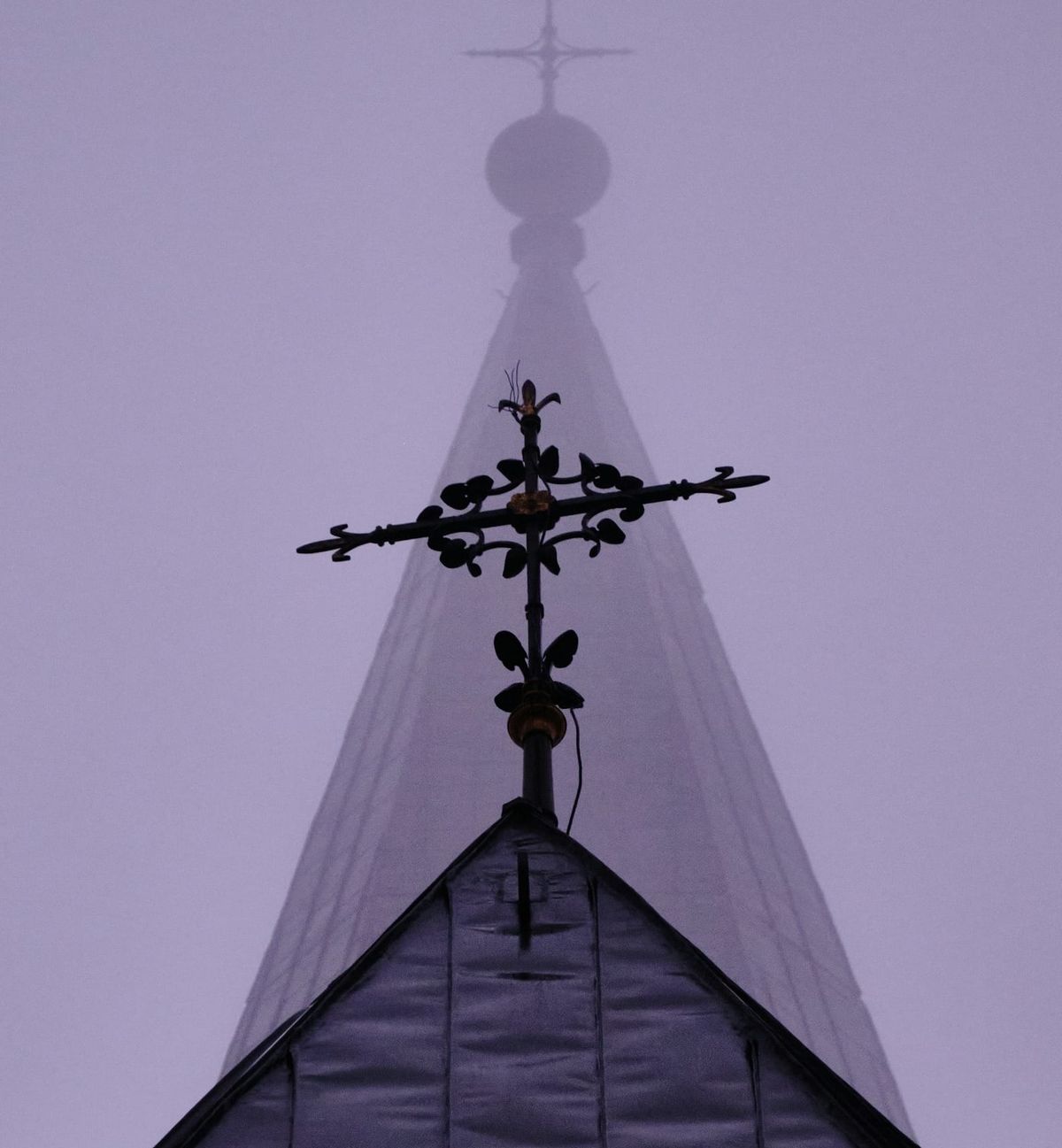
Nona and the Accidental Miracle
At Mass, Nona tried not to get distracted as the priest spoke of the importance of charity, but the thought that charity begins at home kept interposing itself. Hadn't she seen with her own eyes how those international types, funded by heaven only knew who, had lorded it over villages like hers during the reconstruction after the war? Also, Father Pezo was a fine man in many ways, but a less practical man would be hard to imagine. He was the only man, his housekeeper joked, so incompetent that his shelves might miraculously put themselves up sooner than he would complete the job. So if he were to manage the money for a charitable concern, something was sure to go wrong. To say nothing of the criminal element, who never missed a chance to skim off what they could. Perhaps, she wondered, this is what Our Lord meant when he said, "don't let your left hand know what your right hand is doing." Lastly, Nona thought: weren't all these very reasonable points just an excuse not to do the right thing? What was she to do?
Nona, as a rule, was not one for philosophical speculation, but this conundrum stayed with her until the following Mass. Her sleep had been disturbed by a ferociously stormy autumn night, and on entering the church she found buckets laid out to catch the rain coming through the roof. Father Pezo impressed upon the congregation that the collection plate was going round to fund the necessary work. But of course no one would give! Nona put something in, but the congregation's hearts were hardened. Brigio Rossi, the builder, would undoubtedly get the work, as he was the only builder in the vicinity, but his drinking was well known, and of course he never even came to church. The congregation must have decided that Father Pezo's well-meaning impracticality combined with Brigio's thirst meant money they could ill afford to lose, or worse, Brigio ending up harming himself.
These troubling thoughts played on Nona's mind as she looked up at Our Lady, whose expression seemed to say, it always falls to us. Following Our Lady's gaze, Nona saw Maria Rossi, Brigio's long-suffering wife, sitting alone with her thoughts, the nearly empty plate in her hands a profound reproach.
Outside at the end of Mass, Nona made a beeline for Maria. The poor woman stood ashamed in the inexplicably strong sunlight, unable to leave, unable to stay. Nona made to say something, but the words of consolation wouldn't come. Maria broke the silence.
"He's a good man, really he is, it's just…"
Nona thought better of saying anything, as Maria continued.
"…but as he says, no one gives him a chance."
Nona fashioned her most sympathetic look, and in the pause Father Pezo walked over to them. And then the strangest thing happened.
"Mrs Rossi, I was wondering if we could prevail upon the services of your fine husband," the Father said.
"Why of course, I'll go and fetch him right away!" And off the confused Maria ran.
Nona couldn't believe it. Had the plate suddenly filled from some unseen hand at the end of the collection? Our Lady of the Blessed Saints had seen its fair share of miraculous happenings, but this?!
The truth, Nona learned, was both more prosaic and yet still miraculous. Father Pezo had simply assumed the collection plate held enough money, and so had asked Mrs Rossi to fetch her husband. But because there was no money, Brigio couldn't be paid in advance, and so couldn't spend it on drink. It was a miracle of sorts: once Brigio had completed the work, the parishioners would be only too pleased to pay for a job well done.
But Nona couldn't just leave things entirely to the Almighty. First, she caught up with Maria and explained that she must convince her husband to be paid on completion. The sensible lady pointed out that they would need to buy the building materials before the work could start. Then Nona had a brainwave. She had catered the builders' merchant's daughter's wedding and hadn't yet been fully paid. She hadn't felt able to ask him; it was too embarrassing! But now she had a reason to go round there. So her next visit was to the merchant, and when she explained the problem, it was agreed: since it was for a good cause, the merchant would extend credit to the church so Brigio would have the materials for the roof. In the pause after the plan was settled, the merchant "suddenly" remembered the money he owed Nona. No unpleasantness at all.
Through an ECRL lens
Nothing in the story depends on anyone becoming more trustworthy. Father Pezo stays impractical, Brigio stays thirsty, the congregation stays suspicious. What changes is the structure. Three mechanisms do the work:
- Payment on completion. Money moves only after work is done, so it can't be drunk, skimmed or mismanaged in advance.
- Credit to the institution, not the individual. The merchant extends credit to the church. Brigio never holds money or credit, so he is never put in the way of temptation, and nobody has to judge him first. The structure carries the risk so he doesn't have to.
- A shared good cause as the place where things get settled. Nona's invoice had sat unpaid because asking felt too awkward. The church roof gave her a reason to call, and inside a generous arrangement the merchant could settle up without anyone losing face.
In the story this all happens by accident. ECRL makes it deliberate.
The Kitchen: the fund and its policy
The goal is to repair the church roof. The Kitchen is the village fund, held in the church's name, and its policy is simple: funds are released only against attested completion of specific, pre-agreed tasks. Donors give into a structure, not to a person, and suppliers extend credit to the same structure.
The Meal Kit: the plan
Brigio's plan lists the materials with estimated costs, the work in phases (Phase 1: secure the leak and replace damaged rafters; Phase 2: re-tile the northern slope), and a definition of done for each phase. Maria is the plan's first reviewer. She spotted that payment on completion fails if the materials must be bought up front, and the plan takes its final shape because of her. She keeps Brigio to its terms, but she doesn't attest the work. The contractor's wife can't mark his homework.
The Pass: attestation at each stage
- Materials. The merchant's delivery note, checked against the agreed list, is recorded against the church's credit. Brigio never handles the materials money.
- Labour. Father Pezo and two impartial villagers sign off each phase against its definition of done, which unlocks that phase's payment to Brigio.
- Side effects. Because the arrangement is open and attested, neighbouring obligations surface naturally. The merchant's debt to Nona was never part of the plan, but the plan created the occasion to settle it.
The Ready Meal: the attested outcome
The finished roof, with a final attestation: repaired as per plan, signed off by Father Pezo and the villagers, with photographs; X disbursed against Y attested milestones; the church's credit with the merchant cleared. This is what the donors wanted all along. Not a promise that their money would be well spent, but a record that it was.
Nona's excuses for not giving turned out to be the specification. The aid workers, the impractical priest, the criminal skim, the builder's thirst: each is a failure mode that milestone attestation designs out. And "charity begins at home" proved true after all, just not the way Nona meant it. The good she did came back to her own door. Charity, it turns out, doesn't need saints. It needs a recipe.