Building Trustworthy Anything or just Software at Scale: What Henry Ford and Nona's Kitchen Can Teach Us
The way we structure collaboration profoundly changes the scale and complexity of what we can achieve.
Or All the Great Taste of 'Yes, Chef!' Without the central authority!
The same impossible choice haunts every field:
Data scientists need clean datasets: build your own (months of work, might miss edge cases) vs. use external data (unknown quality, potential bias).
Procurement managers need reliable suppliers: vet everything in-house (expensive, slow) vs. trust vendor claims (risky, often disappointing).
Medical researchers need validated protocols: develop from scratch (years, regulatory hurdles) vs. adapt existing methods (uncertain provenance, reproducibility issues).
Ethereum developers need secure libraries: build custom (3 months, might have vulnerabilities) vs. use popular packages (unknown security track record) vs. enterprise solutions (secure but complex, expensive).
This pattern—trustworthy systems that are unshippable vs. shippable systems that are untrustworthy—is killing innovation across every domain. But what if we could learn from an unexpected source: the way modern kitchens manage quality and trust?
Ford's Insight Applied to Trust
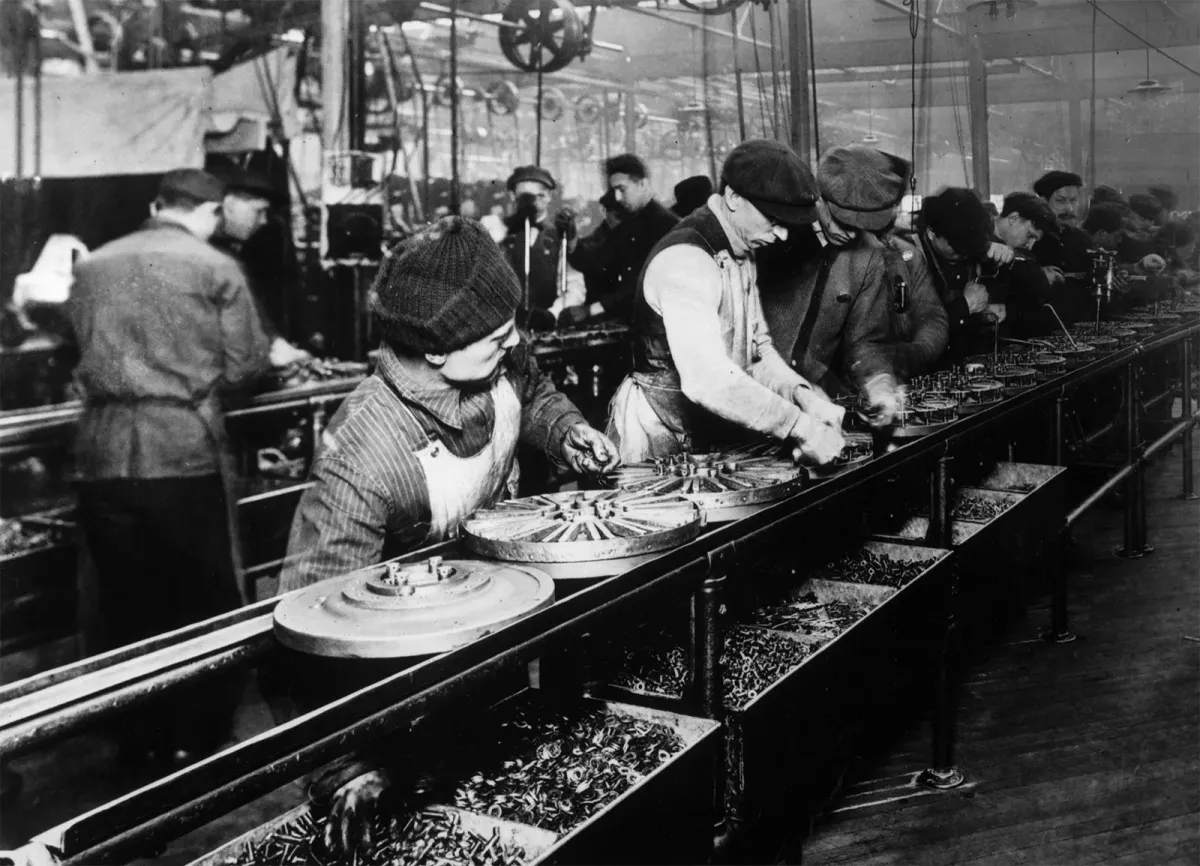
Henry Ford's revolutionary assembly line came from watching a slaughterhouse's dis-assembly process—moving the product between specialized stations rather than moving workers. This simple change made mass production of intricate machines possible. The way we structure collaboration profoundly changes the scale and complexity of what we can achieve.
Today's software development is stuck in the "craftsman" model—every team rebuilding trust from scratch. What if we could create an "assembly line for trust" where specialized attestors contribute verifiable guarantees that compose into complex, trustworthy systems?
Three Layers of Verifiable Trust
Let's explore this through modern food preparation, then see how it revolutionizes software development.
Ready Meals: Compiled Trust
Pop a "Classic Plant-Based Gluten-Free Lasagne" into the microwave. Notice those labels with their complex guarantees: "Certified Vegan," "Nut-Free Facility," "Organic Ingredients." Each label represents a verifiable attestation from a specialized authority. You're not trusting one company—you're trusting a web of independent verifiers.
In software: This is compiled code with digital signatures, verified checksums, and security attestations. The "labels" tell you what you need to know: "Audited by Trail of Bits," "Formal Verification Complete," "Zero Critical CVEs."
Meal Kits: Composable Components
Prefer a meal kit? You get high-quality, pre-selected ingredients with recipes—an invitation to add flair while maintaining standards. Swap dried oregano for fresh, but the core components are already vetted.
In software: Source code templates with verified libraries. You can modify the implementation, but the foundational components come with their own attestations. Your creativity, aided by trusted constraints.
Kitchens: Organizational Standards
A professional kitchen needs unified standards across multiple dishes: sustainability, allergen safety, consistency. The key insight: standards are applied intelligently—the tiramisu must be nut-free, but eggs are never going to be egg-free, and walnut dip obviously contains nuts.
In software: Organizational policies that define required attestations. A DeFi protocol might require "Formal Verification" for core contracts but only "Code Review" for UI components. Standards that make sense for context.
The Breakthrough: Distributed Trust That Routes Around Failure
Here's where it gets interesting. When Nona chooses chocolate for her famous Christmas cakes, she checks multiple attestations: "Certified Vegan," "Nut-Free Facility," "Fair Trade." She's not trusting one authority—she's trusting a network of independent verifiers.
The magic happens when one fails. If the "Nut-Free Facility" certification gets compromised, Nona doesn't lose trust in chocolate forever—she routes around that specific attestor and finds alternatives with different, overlapping attestations.
This is the opposite of traditional "brand promise" trust, where compromise is catastrophic. Think Hermes bags: when counterfeits flood the market, the entire brand promise crumbles. But with distributed attestations, compromise becomes detectable and recoverable.
ECRL: The Assembly Line for Software Trust
The Ethereum Component Recipe Ledger (ECRL) applies this insight to software supply chains:
- ENS names identify components (
auth.v2.uniswap.ecrl.eth) - IPFS links store attestation content off-chain
- Multiple independent attestors provide overlapping guarantees
- When attestors are compromised, the system detects and routes around them
Instead of choosing between security and velocity, developers compose pre-attested components with verifiable guarantees. Need authentication? Use a component that's already been audited, formally verified, and battle-tested. Want to customize? Fork the meal kit, make your changes, and the system helps you maintain compliance with your organizational kitchen policies.
Nona's Secret Weapon: Verifiable Collaboration
Back to Nona's cakes. Her secret isn't just great ingredients—it's trusting a network of specialists who each do what they do best:
- Chocolate makers focus on quality cocoa and processing
- Certifiers focus on verifying vegan/nut-free claims
- Facility inspectors ensure cross-contamination doesn't happen
- Supply chain trackers maintain provenance
Each specialist's attestation enables Nona to confidently promise her customers something she couldn't verify herself: "These cakes are absolutely nut-free and incredibly delicious."
The same model works for software. Security auditors, formal verification specialists, and integration testers each contribute their expertise. Developers can compose these attestations to build systems with verifiable guarantees they couldn't achieve alone.
Beyond Food and Software
This isn't just about better development tools—it's about enabling verifiable collaboration at scale. Imagine if every component in your tech stack came with the same distributed, verifiable guarantees as Nona's chocolate buttons.
The framework extends naturally: data pipelines with quality attestations, supply chains with provenance guarantees, research with reproducibility verification. Each new domain strengthens the others through cross-domain network effects.
Building the Future
Ford's assembly line insight—that specialization and standardization could enable mass production of complex machines—transformed manufacturing. Today, we need the same transformation for trust.
ECRL provides the infrastructure for this assembly line of trust: minimal on-chain primitives (ENS + IPFS) supporting rich off-chain attestation networks. Developers get security without sacrificing velocity. Organizations get compliance without sacrificing innovation.
The result? Software development where "secure and fast" isn't a contradiction—it's the default.
Ready to help build this future? ECRL is actively seeking ecosystem partners for pilot Kitchen implementations. Because the best way to predict the future is to build it—together, with verifiable guarantees.